• Blind Intersections in California

Blind Intersections in California – What Counts & How to Drive Them

Blind intersections in California create some of the most misunderstood situations for new drivers. The DMV tests this topic often because a driver who misjudges visibility can enter cross-traffic without enough time to react. Understanding how the state defines a blind intersection — and how to move through one safely — is essential for both the written test and real-world driving.

What Makes an Intersection Blind?

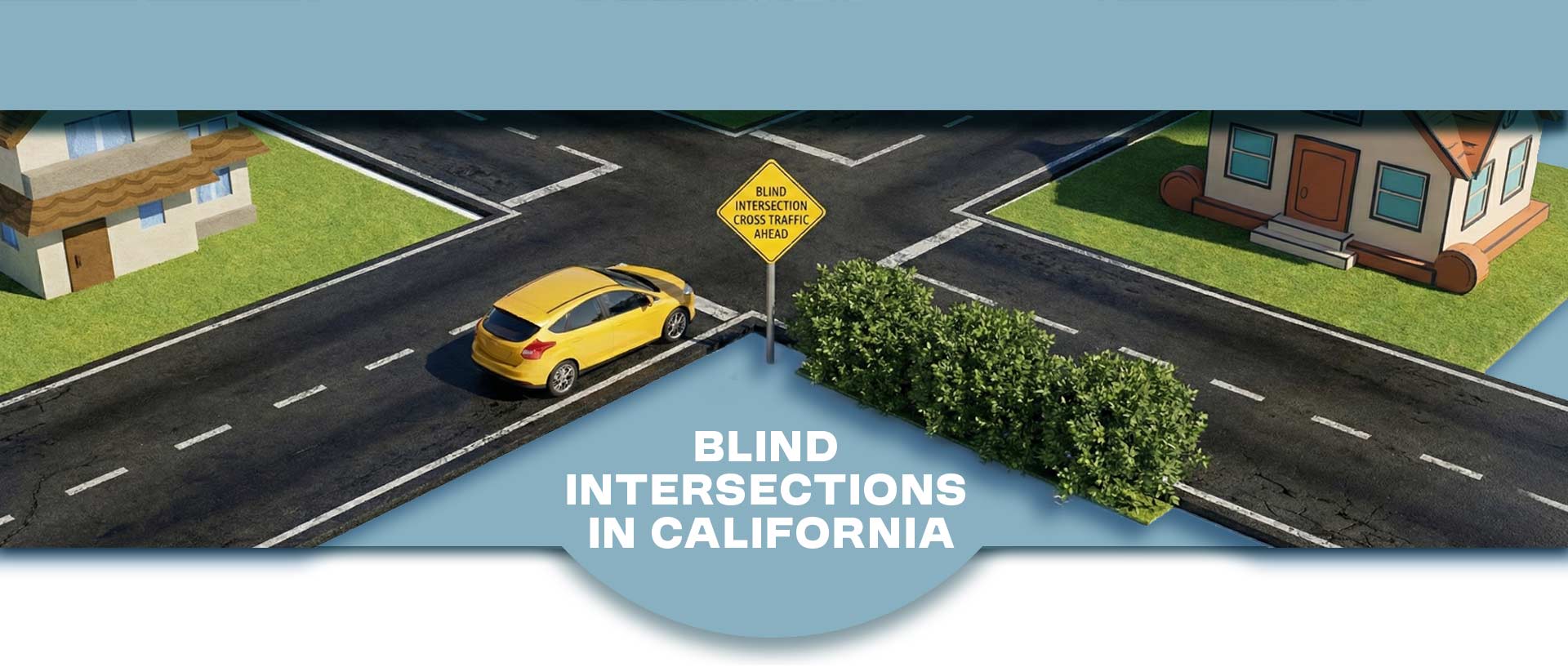
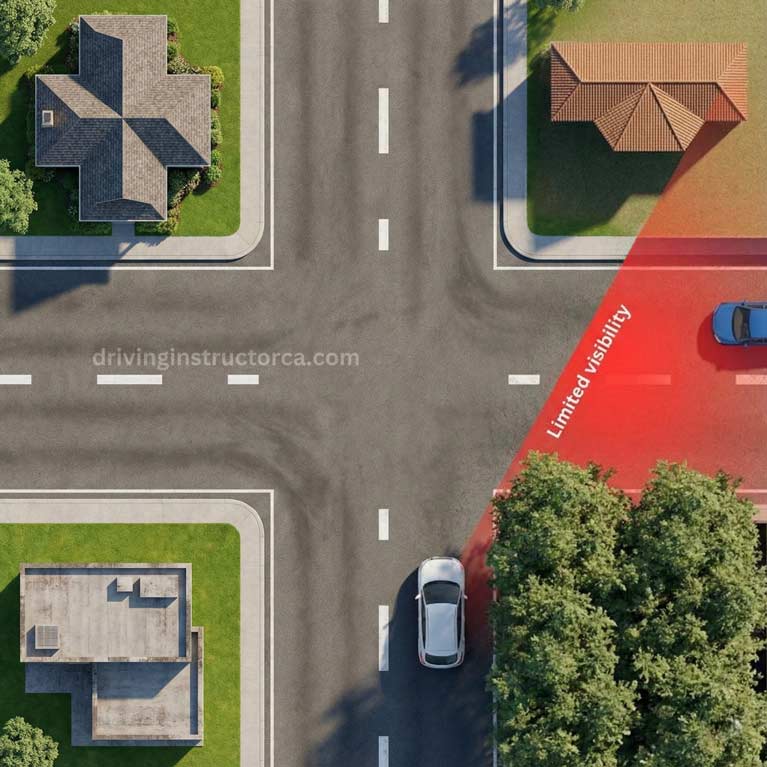
An intersection becomes “blind” when your view of cross-traffic is blocked for roughly 100 feet in either direction. Buildings, fences, parked cars, hedges, hills, and even sharp bends in the road can hide approaching vehicles.

Imagine creeping toward a cross street where tall hedges run right up to the sidewalk. You cannot see cars coming from the left or right until you are nearly inside the intersection — that is a classic blind-intersection scenario.

California expects drivers to judge blindness based on real conditions, not just posted signs. Even without a warning sign, an intersection qualifies as blind if your sightline is limited by the environment.

Blind Intersections in California

When Reduced Visibility Changes the Speed Limit

Under California rules, the default speed limit drops to 15 mph when you approach a blind intersection with no stop sign or traffic signal. The lower speed gives you enough time to scan, creep, and stop if a hidden vehicle appears.

However, 15 mph is not always safe enough. If the roadway is narrow, wet, or crowded with parked cars, you may need to drive even slower. The key principle: adjust speed until you can stop within the distance you can see.

Scenario example:
You’re on a residential street with cars parked tightly on both sides. As you near a cross street, a tall brick wall blocks your right-side view. Even if you’re already at 15 mph, you may need to ease off the pedal to 10–12 mph so you can stop before entering traffic you cannot see.

Right-of-Way Rules at Blind Intersections

Right-of-way still follows normal California rules, but poor visibility makes mistakes more likely.

Here’s what to remember:

  • If there are no controls, the driver who reaches the intersection first proceeds first.
  • When two drivers arrive together, the one on the right goes.
  • If you cannot tell who arrived first, treat it like a four-way stop: communicate with slow movement and hand signals if needed.

A DMV-style trick situation:
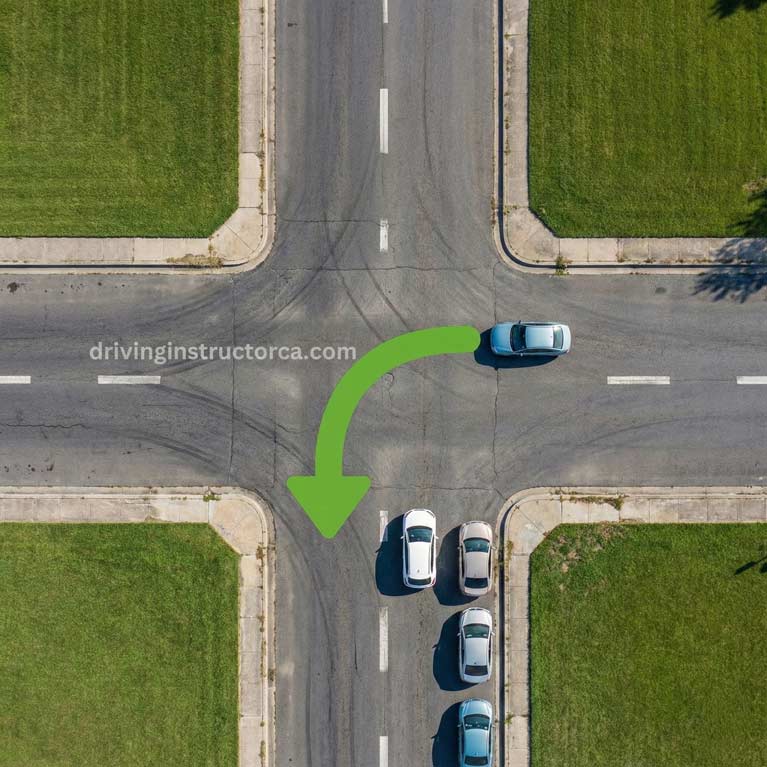
You slowly enter a blind four-way intersection at nearly the same time as another driver. You think you arrived first, but the other driver is already rolling forward. The safest choice is to yield. Uncertainty always favors caution.

Blind Intersections in California

How to Approach and Enter a Blind Intersection Safely

Driving instructors teach a three-step method that works in every blind-intersection situation.

  1. Ease Down to a Crawl

Drop to about 10–15 mph depending on visibility. Rolling too fast eliminates your reaction time.

  1. Move Forward in Small Increments

Creep forward until you reach a point where you can see at least part of the cross street.
Do not swing the nose of your vehicle into the intersection until you have checked both sides.

  1. Scan Left, Right, Then Left Again

The biggest risk typically comes from the left because that side carries traffic closest to your lane.
Look right for approaching vehicles, cyclists, and pedestrians.
Repeat the left check before you cross.

Real-world example:
You advance a few feet and finally see a car approaching from the right at higher speed than expected. Because you moved slowly, you have time to brake before entering its path.

When Parked Cars or Hills Make an Intersection Blind

Many California neighborhoods have steep hills that hide approaching vehicles until they’re nearly on top of you. When a hill blocks your view for more than about 100 feet, treat the intersection at the bottom as blind and apply the same 15 mph rule.

Parked vans and SUVs can create the same issue. Even if the street feels familiar, a temporary delivery vehicle can turn a normally visible intersection into a blind one. Always adjust to current conditions—not memory.

Common Mistakes Drivers Make at Blind Intersections

New drivers often get into trouble when they:

  • Assume the cross street is clear because they don’t hear anything
  • Roll through without creeping forward
  • Treat a blind intersection like an open one
  • Rely only on a quick glance instead of a full scan
  • Speed up to “beat” unseen traffic

A small misjudgment here can cause severe collisions because vehicles appear suddenly with no time to react.

Driving Through Blind Intersections in California with Confidence

Blind intersections in California demand patience, slow movement, and careful scanning. When you treat every blocked-view intersection as a potential hazard, you create more time to react and reduce the risk for everyone — yourself, your passengers, and the drivers who may be hidden just out of sight. If you understand how blind intersections work and practice the slow-creep approach, you’ll handle these areas safely on your DMV test and out on the road.