
• Speed Limits in California

Speed Limits in California: Default Rules, Posted Signs, and Common DMV Traps

Speed limits in California involve more than simply reading the number printed on a roadside sign. Many new drivers struggle with speed-related questions because the correct answer can shift depending on where you are, current roadway conditions, and whether any signs are posted at all. The written exam mirrors real driving by emphasizing practical judgment instead of pure memorization.
This guide explains how California speed rules work in everyday situations, clarifies how legal limits apply when signs are missing, and highlights scenarios that often confuse test-takers.

Why Speed Limit Questions Are Tricky on the DMV Test

Speed questions often appear straightforward, yet small details can completely change which rule applies. The exam typically checks whether you can correctly interpret a situation, not whether you remember a single number.

The same road does not always permit the same legal speed. A residential street, for example, may feel acceptable at one speed on a clear day but require slower driving when visibility drops or children are nearby. Traffic behavior, road shape, and how far ahead you can see all influence which speed rule applies.

Many exam questions describe common, everyday driving situations rather than clearly marked highways or city streets. To answer correctly, you must recognize your surroundings and decide which rule fits that setting.

Default Speed Limits in California (When No Signs Are Posted)

Even when no speed limit sign is visible, California law still establishes a specific legal speed. These preset limits apply automatically and carry the same legal authority as posted signs.

Business Districts

In business districts, the default speed limit is 25 mph. These areas are identified by closely spaced commercial buildings along the roadway, not by individual storefronts alone. Drivers often assume a higher speed is acceptable when the road feels wide or open, which frequently leads to incorrect answers on the exam.

Speed Limits in California

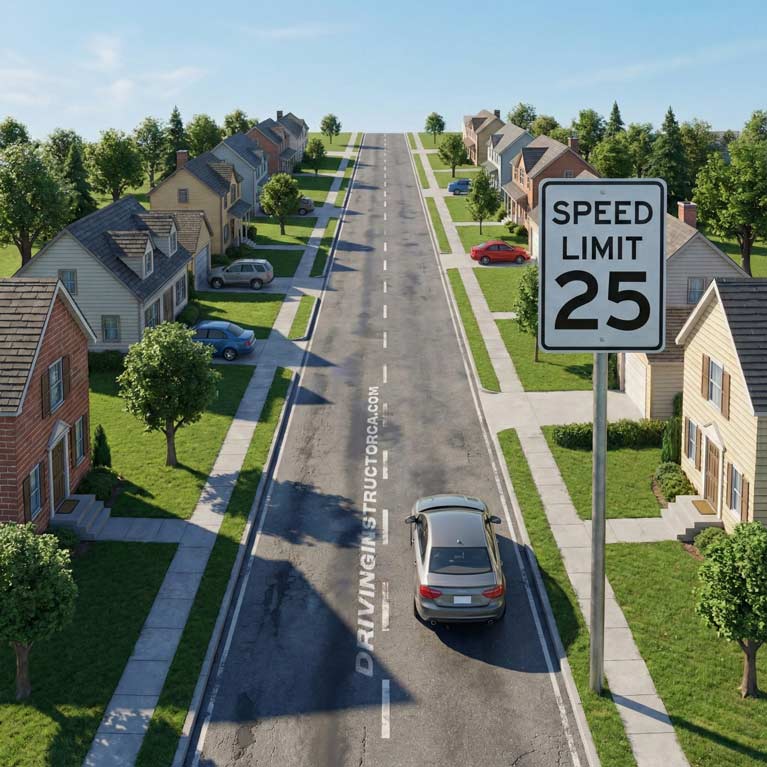
Residential Areas

Most residential streets also have a default speed limit of 25 mph. Streets with nearby homes, frequent driveways, and parked vehicles generally qualify as residential, even if no speed limit sign is present. The absence of a sign does not remove the limit.

School Zones (When Children Are Present)

When children are present near a school, drivers must slow to 25 mph unless signs indicate otherwise.
This rule applies during school hours and whenever children are clearly nearby. Many drivers overlook the situational nature of this rule and assume it applies at all times.

Speed Limits in California

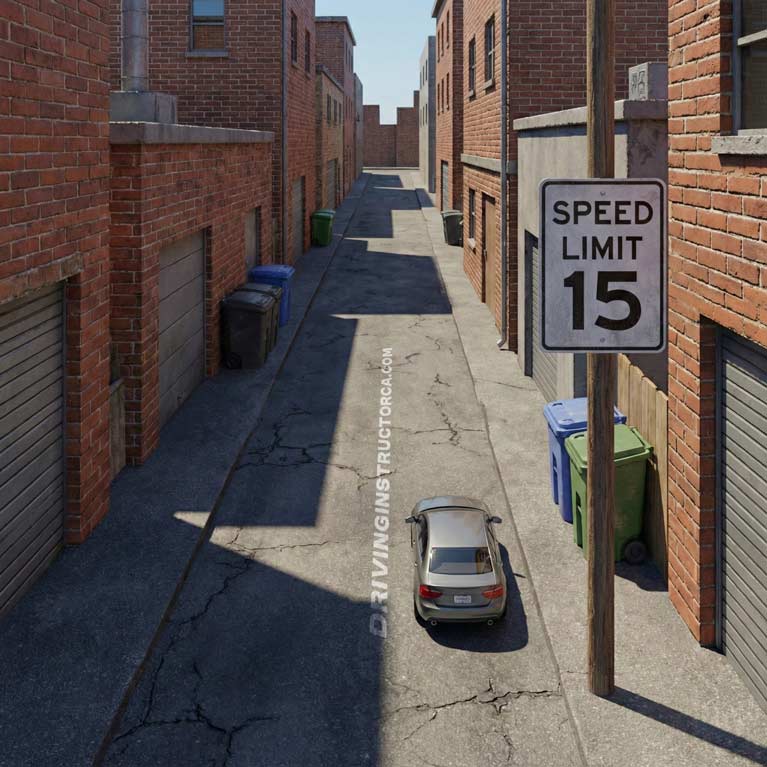
Alleys

Alleys have one of the lowest default speed limits, set at 15 mph. These areas are easy to overlook on the exam, but the law treats alleys as distinct roadways with limited visibility and frequent pedestrian movement.

What Default Really Means

A default speed limit is not optional or advisory. It is a legally established limit that applies automatically when no sign is posted. Some drivers assume that no sign means no restriction, but default speeds remain enforceable.

Posted Speed Limits vs Real-World Conditions

Posted speed limits generally indicate the maximum speed allowed under ideal conditions. They do not guarantee that driving at that speed is always appropriate.

Weather can quickly change what feels safe. Rain, fog, glare, or darkness may reduce visibility or traction enough to make the posted speed unsafe. Situations such as construction zones, temporary lane shifts, or heavy traffic may also require slowing down, even if the posted number remains the same.

Road design also plays a role. Curves, hills, and narrow lanes shorten reaction time and limit how much of the road is visible, which means drivers must adjust their speed accordingly.

When Driving Below the Speed Limit Is Also a Problem

Many new drivers believe that driving below the speed limit always increases safety. While caution is important, moving far slower than surrounding traffic without a clear reason can create new risks.

On highways and multi-lane roads, large differences in speed can interrupt traffic flow and catch other drivers by surprise. This is especially noticeable in left lanes, which drivers typically use for passing or maintaining a faster pace. Staying in the left lane at a slow speed without passing often leads to congestion and unsafe lane changes.

Drivers may choose to reduce speed for valid reasons, including heavy traffic, poor weather, roadway hazards, or vehicle-related issues. The key factor is whether the slower speed fits the situation.

Common DMV Speed-Related Traps and Misunderstandings

Certain speed-related misunderstandings appear frequently on the written exam. These questions are not designed to trick you, but they do reveal gaps in how drivers interpret the rules.

A common mistake is assuming highways always allow 65 mph. In reality, highway speed limits vary depending on location and road design, and the correct answer depends on what the question actually describes.

Weather-related details also cause problems. Questions often include rain, fog, or low-visibility conditions intentionally, and overlooking those details can easily lead to the wrong choice.

Advisory signs add another layer of confusion. Yellow advisory speed signs show a recommended speed for specific situations, such as curves, but they do not carry the same authority as regulatory speed limit signs.

Drivers also tend to overlook alleys and residential streets because they do not feel like major travel routes. On the exam, however, these areas are treated as clearly defined locations with specific speed rules.

Speed Limits in California

How to Practice Speed Questions the Right Way

The most effective way to prepare for speed-related questions is to focus on scenarios rather than memorizing numbers. When you understand why a certain speed applies, it becomes easier to identify the correct answer even when the wording changes.

Working through realistic driving situations helps you notice details such as your location, how far ahead you can see, and how traffic is actually behaving. This closely reflects how drivers make decisions on the road.

You can start with practice California speed limit questions to better understand how speed rules apply across different driving situations and how exam questions are structured.

Speed decisions also connect to other rules. For example, lane rules and road markings can influence safe speed choices, especially on multi-lane roads or during merging situations.

By practicing with real-world scenarios instead of isolated facts, you build the reasoning skills the exam tests—and the habits that matter once you’re on the road.