
Safe Speed in California: Legal Limits vs Road Conditions

Safe speed in California is not determined by a single number on a sign. It depends on what the road is doing at that moment and how quickly conditions can change while you are driving. This idea appears frequently on the written exam because it reflects real driving decisions, not memorized limits.

Two vehicles can travel at the same posted speed and face very different levels of risk. One may be moving smoothly with plenty of space and visibility. The other may be approaching a curve, entering congestion, or dealing with reduced traction. This article explains when a legal speed becomes unsafe, why conditions matter more than numbers, and how this reasoning shows up in exam-style questions.
safe speed in California

Why Safe Speed Questions Confuse Drivers

Safe-speed questions are challenging because they require judgment instead of recall. Many new drivers expect a clear rule, such as staying at the posted limit unless a sign says otherwise. That approach works for basic sign recognition but breaks down once conditions change.

Written questions usually set up a short driving scene, such as rain beginning or traffic compressing, and then ask how a driver should respond. In those situations, the correct choice comes from noticing what changed in the environment rather than relying on the posted speed alone.

Another source of confusion is that multiple answer choices may sound reasonable. One option might mention the speed limit. Another may suggest slowing slightly. A third may recommend a more noticeable reduction. The question is checking whether you can identify the detail that turns a legal speed into an unsafe one.

Because road conditions are never static, memorization alone is not enough. The exam reflects this by asking drivers to evaluate situations rather than repeat numbers.

Legal Speed Limits vs the Basic Speed Law

California speed limits set expectations, but they function as upper boundaries rather than guarantees of safety. Staying under the limit can still be too fast when the road or traffic situation tightens.

This principle is often summarized in California as the expectation that drivers adapt speed to conditions. Practically speaking, drivers are expected to slow when visibility, traction, or reaction time is reduced by weather, traffic, or road design.

Think of speed limits as a ceiling. On a clear, open road, traffic may move close to that ceiling. As conditions change, the safe operating speed often drops well below it. The number on the sign does not change, but the margin for error does.

If you need a refresher on how posted limits are set and where they apply, see our separate guide on Speed Limits in California: Default Rules and Common Confusion. This article focuses on what happens after the limit is already known.

Weather Conditions That Change Safe Speed

Weather can quickly turn a legal speed into an unsafe one, which is why exam questions often rely on weather details.

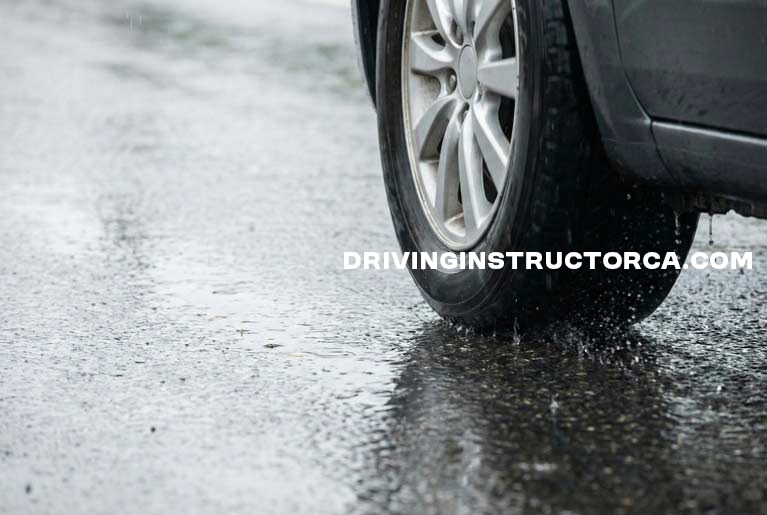
When pavement becomes wet, tires lose some of their ability to grip the road, which makes stopping take longer. At the beginning of a storm, light rain can actually make the road more slippery as residue lifts to the surface. Maintaining the same speed in these conditions leaves less room for controlled braking.

safe speed in California

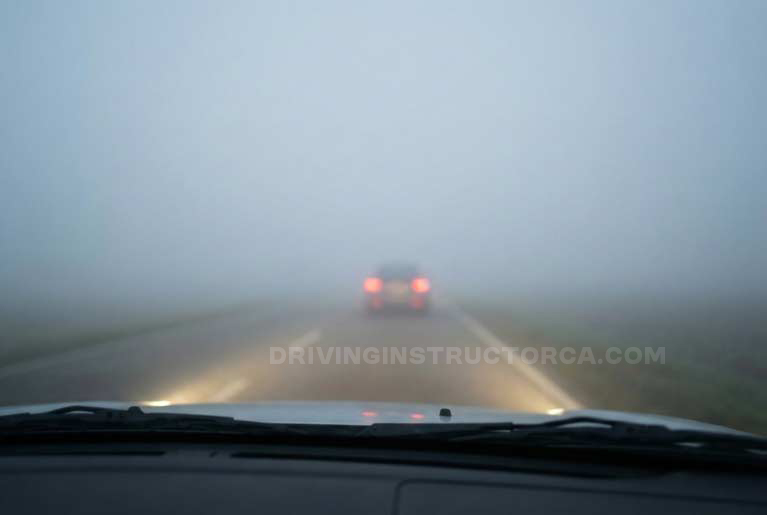
Fog limits how much of the road you can read ahead of your vehicle. Less visibility leaves drivers with less time to recognize and respond to hazards. Driving at the posted speed may not allow enough distance to react to stopped traffic, curves, or debris.

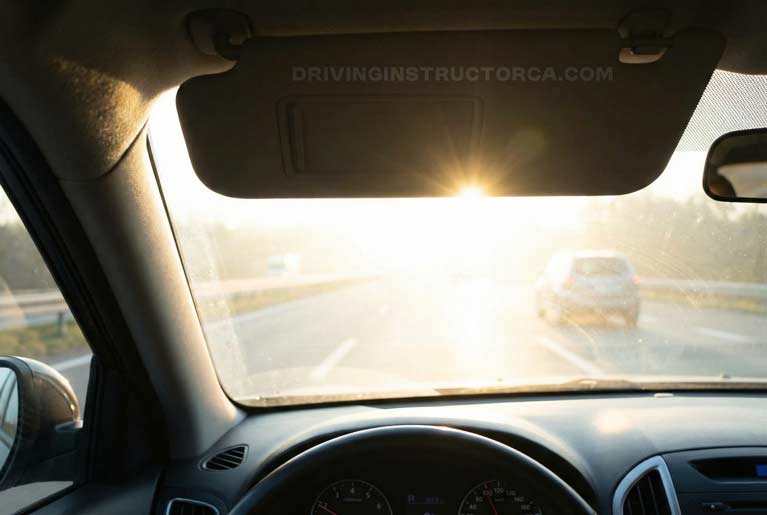
Low-angle sunlight, common in early mornings and late afternoons, can briefly wash out a driver’s view of lane lines, signals, or vehicles ahead. When visual detail fades, speed needs to drop until the road becomes clear again.

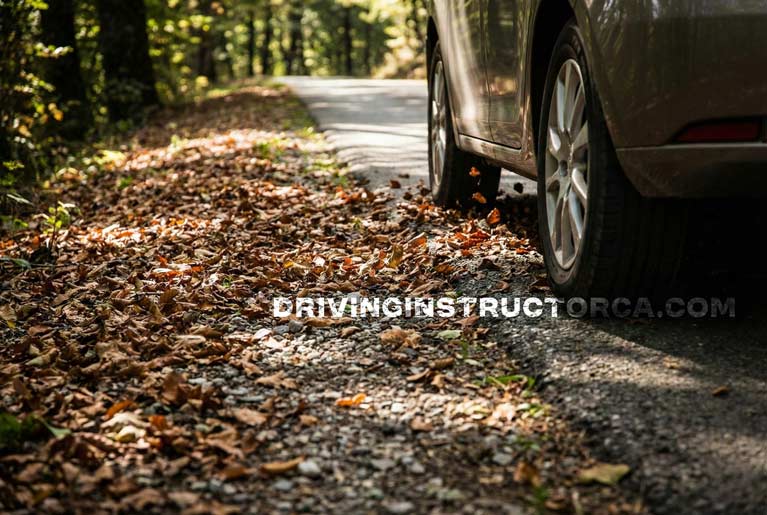
Traction problems are not limited to rain. Leaves, gravel, and storm debris can create the same loss of control, especially on shaded roads or near the shoulder. These hazards are easy to miss until the vehicle reacts differently than expected.

safe speed in California

Traffic, Visibility, and Road Design

Speed decisions are also shaped by how the road is built and how traffic behaves.

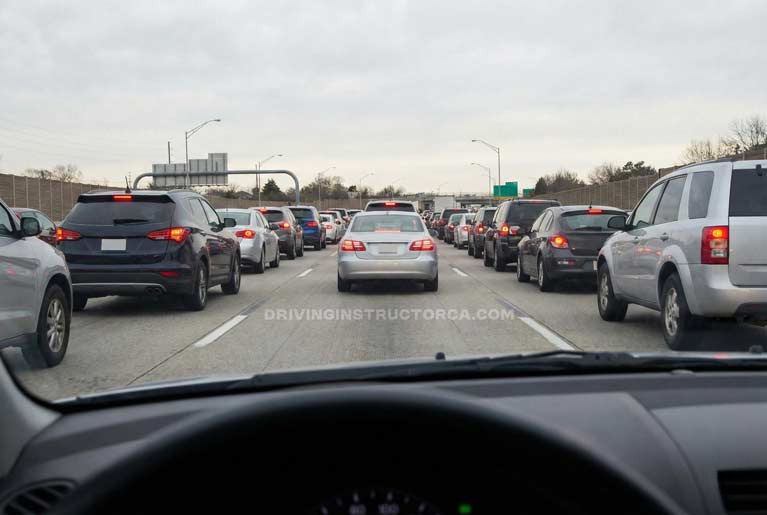
In heavy traffic, space between vehicles shrinks. At higher speeds, small changes in flow can trigger sudden braking and chain reactions. Reducing speed slightly can stabilize traffic and improve reaction time.

Curves and hills limit how far ahead drivers can see. A speed that feels comfortable on a straight stretch may be too fast when the road ahead is hidden. Exam questions often mention curves or hill crests to signal reduced sight distance.

On roads with narrow lanes or fixed roadside objects, drivers have far less room for correction. Minor steering errors become more serious at higher speeds, which is why slowing down improves control.

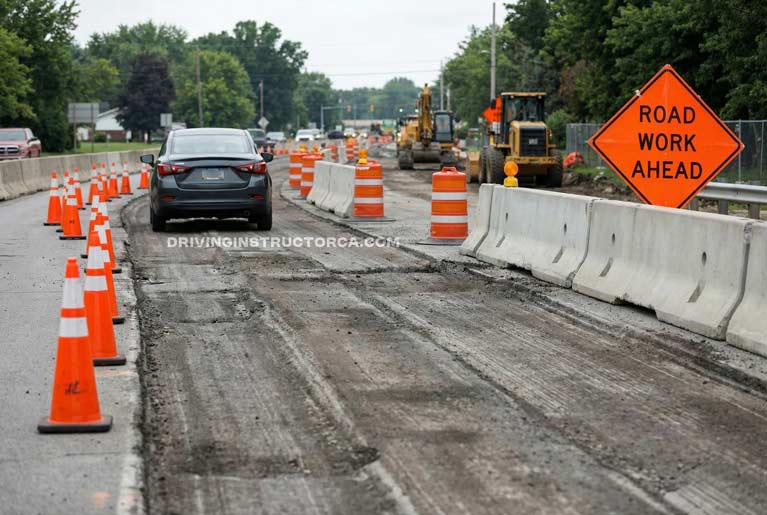
Construction areas tend to stack multiple challenges at once, from shifting lanes to uneven pavement and sudden traffic stops. Even when a temporary speed limit is posted, conditions inside the zone may still require additional adjustment.

Road markings and lane layout also affect safe speed decisions. Narrowed lanes, channelized areas, or unusual markings signal changes in traffic behavior. Speed and lane choice work together in these situations. For more context, see Solid vs Broken Lines in California: What Each Marking Actually Allows.

safe speed in California

Common DMV Safe-Speed Misunderstandings

Many incorrect answers come from the same set of misunderstandings:

“The speed limit is always safe.”
Posted limits assume favorable conditions, which are not always present.

Overlooking visibility clues.
Details like fog, glare, or darkness often determine the safest response.

Underestimating curves and hills.
Limited sight distance means less time to react, even if the curve looks mild.

Failing to adjust in rain.
Questions often test whether you recognize longer stopping distances, not just traction.

Following traffic speed without evaluation.
Other drivers moving quickly does not automatically make that speed appropriate.

These misunderstandings usually happen when drivers focus on one factor instead of reading the full scene.

Practice This Rule in Real DMV-Style Questions

Safe-speed rules are tested through scenarios involving weather, visibility, traffic flow, and road design.
Practice California DMV questions that focus on adjusting speed to real driving conditions.

How Safe-Speed Questions Are Tested

Safe-speed questions are typically built around short scenarios. They describe a roadway, introduce one or two changing conditions, and then ask what the driver should do.

Look for clues such as:

  • Weather starting or worsening
  • Traffic slowing or tightening
  • Road features that limit visibility

Several answers may seem plausible because they all involve real driving behaviors. The best answer is the one that restores a safety margin before control is compromised.

The exam is not asking for an exact speed. It is asking whether you recognize when conditions require adjustment.

How to Practice Safe-Speed Decisions

The most effective way to practice safe-speed judgment is through scenario-based questions. A better approach is to look for the single detail in the scenario that changes how safe the situation is.

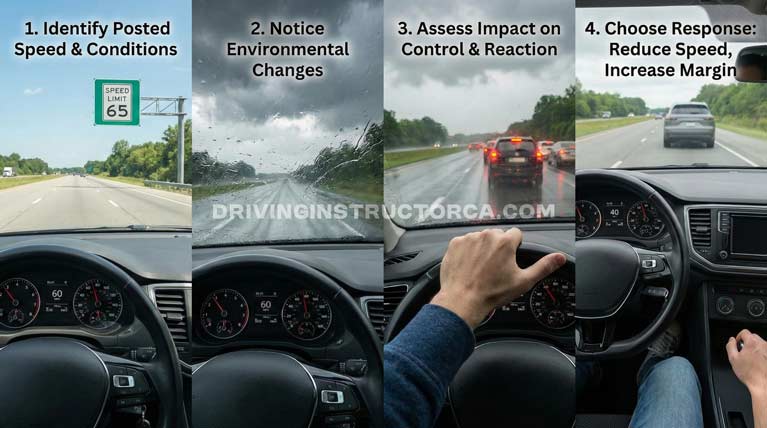
Use this process:

  1. Identify the posted speed.
  2. Notice what changed in the environment.
  3. Decide how that change affects control or reaction time.
  4. Choose the response that increases safety margin.
safe speed in California

Working through varied scenarios helps train your judgment to respond to conditions rather than defaulting to a posted number. You can start here: practice California safe speed questions.

Real driving situations are easier to master with guided practice and feedback.

Safe speed in California is about awareness and adjustment. When drivers learn to respond to conditions instead of relying on numbers alone, both test questions and real-world driving become clearer and more manageable.