

• HOV Lanes Explained

HOV Lanes Explained: Solid Lines, Entry/Exit Zones, and What to Do During a Traffic Stop

High-Occupancy Vehicle (HOV) lanes—often called carpool lanes—exist to reward drivers who share rides and to keep traffic flowing on California’s busiest freeways. But many drivers remain unsure about how these lanes actually work, especially when it comes to solid lines, merging areas, and what to do if law enforcement signals you to pull over inside an HOV lane.

Understanding these details isn’t just about passing your DMV test—it’s about driving safely, legally, and confidently every day.
What Exactly Is an HOV Lane?

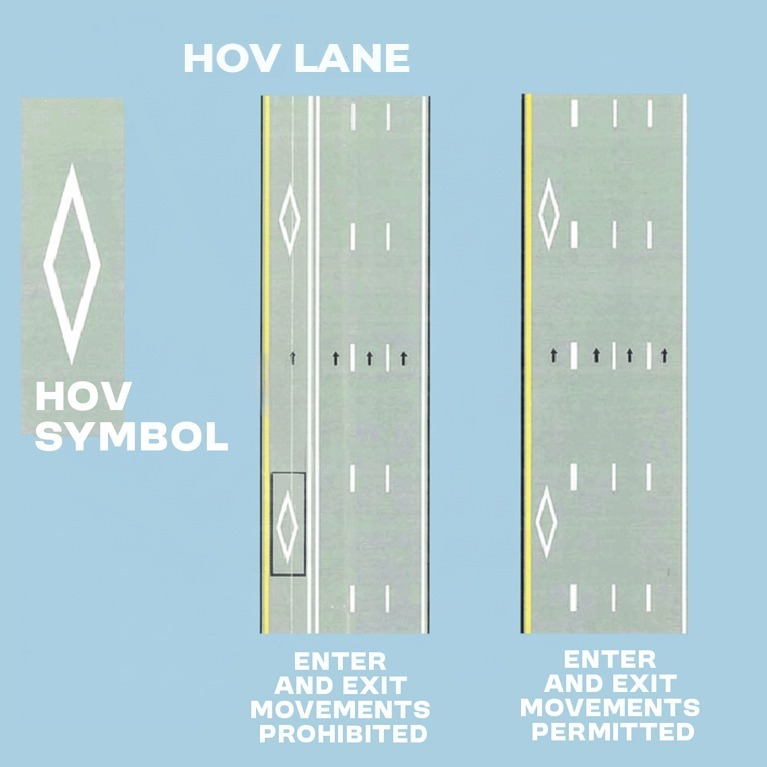
An HOV lane is a dedicated traffic lane on freeways designed for vehicles carrying two or more occupants, or for drivers of approved clean-air vehicles with a valid DMV decal. You can identify these lanes by white diamond symbols on the pavement and overhead signs labeled “CARPOOL LANE” or “HOV LANE.”

For most freeways, HOV lane use is allowed only during posted hours, typically Monday through Friday during rush hour, though rules vary by region.

DMV test tip:
If you’re asked, “What symbol marks a carpool lane?”, the correct answer is a white diamond painted on the lane surface.

Solid Lines: Why You Can’t Cross Them

One of the most misunderstood parts of HOV lane use involves solid white or double solid lines. These lines aren’t decorative—they act as legal walls.

A single or double solid line separates the HOV lane from regular traffic. Do not enter or exit across these lines. Wait until you reach a dashed section or a clearly marked opening.

Crossing a solid or double solid line is a moving violation that can lead to fines exceeding $490, points on your driving record, and higher insurance premiums. It’s one of the most common carpool-related tickets issued by the CHP.

DMV exam hint:
If the question asks, “When can you enter or exit an HOV lane?”, the correct answer is only through designated dashed line sections.

Entry and Exit Zones: Where It’s Safe to Merge

Look for broken or dashed white lines—these mark the legal areas to merge in or out of the carpool lane.
If you miss the dashed section, do not cut across the solid line to exit. Instead, stay calm, continue until the next legal opening, and merge safely.

It’s far better to drive a few extra miles than to risk a $490 fine or cause a collision. Sudden lane changes or “last-second exits” are among the top causes of freeway accidents during DMV driving tests.

Real-world example:
You’re in the carpool lane and realize your freeway exit is approaching, but there’s a solid line between you and the exit lane. What should you do?
✅ Stay in the HOV lane until it’s legal to cross.
❌ Don’t cross the solid line—it’s both unsafe and illegal.

HOV Lanes Explained

Special HOV Lane Situations

California freeways have a few unique HOV setups:

  • Reversible HOV lanes: Some sections, such as parts of I-110 or SR-14, change direction depending on rush-hour flow. Always follow electronic overhead signs indicating whether the lane is open or closed. Never enter when signs show a red X.

  • Freeway on-ramp connections: Certain HOV lanes connect directly to dedicated carpool ramps for faster merging. These ramps still follow the same entry rules—only enter where dashed lines allow.

  • Temporary closures: Maintenance crews, CHP, or accidents may temporarily close a carpool lane. Follow posted signs and merge out through the nearest dashed opening.

DMV study tip:
If your test asks, “What does a red X above a lane mean?” — it means the lane is closed to traffic in your direction.

Emergency Vehicle Approach in the HOV Lane

What if an authorized emergency vehicle is approaching from behind while you are traveling in an HOV (carpool) lane? You must yield by safely moving to the right shoulder—even if that requires crossing the solid or double-solid boundary lines of the HOV lane. Under California Vehicle Code §21655.8, crossing the lines is permitted in emergencies, and §21806 requires you to pull as far right and stop for emergency vehicles. Always signal, ensure the path is clear, and merge right as soon as safe to allow the emergency vehicle to pass.

What to Do During a Traffic Stop in an HOV Lane

If law enforcement signals you to pull over while you’re driving in an HOV lane:

  1. Do not stop inside the lane. Continue calmly until you find the next safe area or shoulder outside the solid line.

  2. Use your right signal to indicate cooperation.

  3. Once stopped, stay in your vehicle with hands visible.

  4. Provide your driver’s license, registration, and proof of insurance when asked.

  5. Avoid arguing or debating the citation roadside. Handle disputes later in court if necessary.

Remaining respectful and composed demonstrates exactly what DMV examiners look for—calm judgment under pressure.

Common Mistakes to Avoid

Many drivers—especially new ones—make predictable errors when using HOV lanes:

  • Entering or exiting through solid or double lines

  • Driving solo without meeting HOV or CAV requirements

  • Weaving between general and carpool lanes in heavy traffic

  • Ignoring “HOV Lane Closed” or “2+ Only” electronic signs

Every one of these mistakes is preventable—and every one can cost you points on your record or a failed DMV test attempt.

Practice Question Example:

You are driving alone in the carpool lane during posted hours. What can happen?
A) Nothing, if traffic is light.
B) You receive a warning.
C) You can be fined and cited for violating HOV lane rules.
Correct answer: C.

Practice This Rule in Real DMV-Style Questions

HOV lane rules are often tested through scenarios involving solid lines, merging zones, and enforcement situations.
Practice California DMV questions that focus on carpool lane rules and freeway decision-making.

Key Takeaway: Drive Smart, Not Just Fast

HOV lane rules aren’t just about speed—they’re about structure, safety, and shared responsibility.
Stay within the dashed zones, respect the solid lines, and use the lane only when you qualify.

If you remember one thing for your test and for real-life driving:

“A dashed line means choice; a solid line means restriction.”

Real driving situations are easier to master with guided practice and feedback.

By understanding how HOV lanes function—from solid line discipline to lawful pull-over behavior—you’ll drive smoother, safer, and closer to the standard expected from every California motorist.