
• California stop sign rules

California Stop Sign Rules: Complete Stop, Right-of-Way, and Common Mistakes

Few traffic signs are as instantly familiar — or as widely misunderstood — as the red octagon with white letters spelling STOP. It’s one of the first symbols you memorize while learning to drive, yet it remains one of the most commonly ignored in California. Understanding and applying California stop sign rules correctly isn’t just a DMV requirement — it’s a foundation of safe, responsible driving.

Whether you’re moving through a quiet neighborhood, reaching a busy four-way intersection, or facing a flashing red signal during heavy traffic, knowing exactly when and how to stop can help prevent collisions, safeguard pedestrians, and protect your driving record.
What a Stop Sign Really Means

A stop sign is classified as a regulatory traffic control sign, meaning it issues a legal command — not a suggestion. Its unique red, eight-sided design helps drivers recognize it from any direction, even when visibility is poor. The bold white “STOP” lettering emphasizes that drivers must fully comply.

Under California Vehicle Code §22450, all motorists approaching a stop sign are required to halt completely at the designated limit line — the solid white stripe before a crosswalk. If no line is marked, stop before entering the crosswalk itself. If neither exists, you must stop before your vehicle crosses into the intersection.

The key word is complete. Your vehicle must come to a full, motionless stop — no creeping, no gentle roll, and no “California stop.” DMV examiners call this the zero-motion rule, and they can easily spot drivers who fail to stop fully. It’s one of the top reasons people fail the driving test.

Before proceeding through an intersection, scan left, right, and straight ahead for vehicles, cyclists, and pedestrians. Always be ready to brake again if conditions change.

The Purpose Behind the Rule

While it might seem unnecessary to stop when traffic is light, every stop sign has a deliberate placement. They’re installed at locations where vehicle paths cross with pedestrian walkways or bike routes — points of potential conflict.

A full stop gives you a short but vital two-to-three-second window to observe your surroundings. That pause could reveal a child stepping into the street, a cyclist approaching from the right, or a car that hasn’t yet slowed down. Those few seconds can prevent serious crashes and save lives.

Types of Stop Sign Intersections

California drivers typically face three major variations of stop sign intersections. Knowing the difference makes your driving smoother and safer:

  • Two-Way Stop: Only one direction of traffic must stop, while vehicles on the cross street continue freely. You must yield to any cars on the main road before entering.

  • Four-Way (All-Way) Stop: Every direction has a stop sign. The first driver to stop is the first to move. If multiple vehicles stop together, the car on the right goes first.

  • Three-Way (T-Intersection): The driver on the road that ends must stop and yield to traffic on the continuing road. Vehicles traveling on the through road do not need to stop unless specifically signed.

Although these distinctions seem simple, they often cause hesitation and confusion in real-world California intersections.

Who Really Goes First — The Right-of-Way Explained

Picture this: you and another driver reach a four-way stop simultaneously. Who moves first?

Here’s the simplified breakdown:

  • The driver who stops first has the right-of-way.

  • If both stop together, the car on the right goes first.

  • A driver turning left must yield to any oncoming vehicle going straight or turning right.

  • Pedestrians and cyclists always have priority, even in unmarked crosswalks.

Now, a classic DMV question:
Two vehicles arrive at the same time facing each other. One intends to turn left; the other goes straight. Who moves first?
✅ The vehicle traveling straight. The left-turning driver must yield under CVC §21801.

Another tricky example: two cars reach the intersection together — you’re going straight, the car to your right plans a left turn. Who goes first?
✅ The vehicle on the right proceeds first. According to CVC §21800, that driver has the right-of-way, unless the turn clearly creates a hazard.

The California Driver Handbook wisely reminds motorists:

“Never assume another driver will yield. Give up your right-of-way if it prevents a collision.”

Even when you’re legally correct, safety always outweighs priority. Skilled drivers and examiners value judgment — not stubbornness.

The Complete Stop in Action

For a smooth and legal stop, follow this quick process:

  1. Begin braking early and gently.

  2. Stop cleanly behind the limit line — not on it, not past it.

  3. Look left, right, then straight ahead to ensure the way is clear.

  4. Move forward only when it’s unquestionably safe.

If your vision is blocked — say, by parked vehicles or shrubs — stop first at the legal point, then inch forward slowly until visibility improves. If you need to stop again before moving into traffic, do so. This cautious two-step method is not optional; the DMV expects it, and California law supports it.

Flashing Red Lights — Same Rule, Different Look

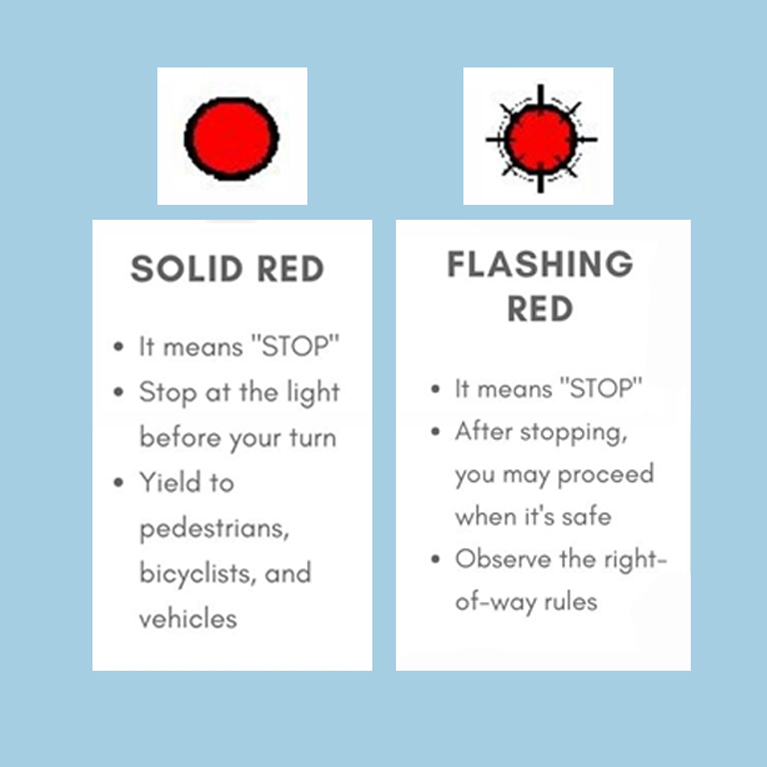
Some California intersections use flashing red lights instead of stop signs, but they mean the exact same thing: come to a full stop, look in every direction, and proceed only when it’s clearly safe to do so. These signals are common where visibility changes throughout the day or where regular traffic patterns fluctuate.

Remember this simple test-prep tip:

“A flashing red light means stop — just as you would at a stop sign.”

California stop sign rules

Common Mistakes That Lead to Tickets or Test Failures

Even experienced drivers make errors that cost points or lead to expensive citations. The most frequent ones include:

  • Rolling through without a full stop.

  • Not yielding to a pedestrian using the crosswalk.

  • Stopping beyond the limit line or inside the crosswalk.

  • Turning left too soon or assuming right-of-way.

  • Letting distractions delay reaction time at intersections.

Under Vehicle Code §22450, failing to stop properly can result in fines exceeding $230, one point on your license, and potential increases in insurance premiums. Repeated offenses can even lead to suspension.

Real-World Scenarios to Master

Scenario 1: The Four-Way Standoff
Two vehicles arrive together. You’re on the left, the other on your right. The car on the right goes first — always.

Scenario 2: Straight vs. Left-Turn
You’re going straight, and the car to your right signals left. That driver still goes first under CVC §21800, unless turning would cause danger.

Scenario 3: The Rolling Stop
You slow down, glance, and go — but never fully stop. CHP officers call this the “California Roll.” If your tires don’t stop rotating, it’s a ticket.

Scenario 4: The Hidden Crosswalk
Even if it’s not painted, a sidewalk that continues across the street marks an unmarked crosswalk. Pedestrians there always have the right-of-way.

Scenario 5: Multi-Car Confusion
Three vehicles arrive nearly at once. Go in the order of who stopped first, and make eye contact if needed to confirm intent before moving.

Why Stop Sign Rules Matter

California’s intersections are responsible for thousands of preventable crashes each year — most caused by drivers rushing through or misjudging a stop. These aren’t random accidents; they’re errors in patience and awareness.

Mastering California stop sign rules gives you far more than test readiness — it builds the defensive habits that define a truly skilled and safe driver. The DMV looks for these habits during exams because real-world safety depends on them.

So next time you see that red octagon, remember: it’s not a pause — it’s a full stop, a moment that could prevent a lifetime of consequences.