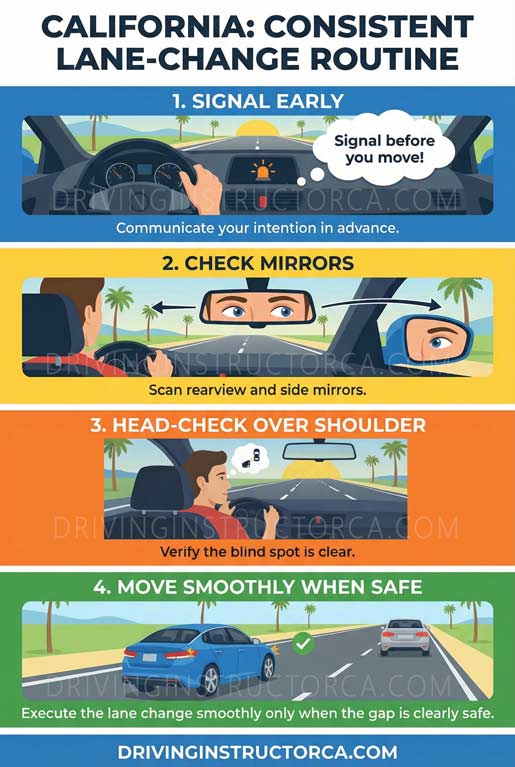
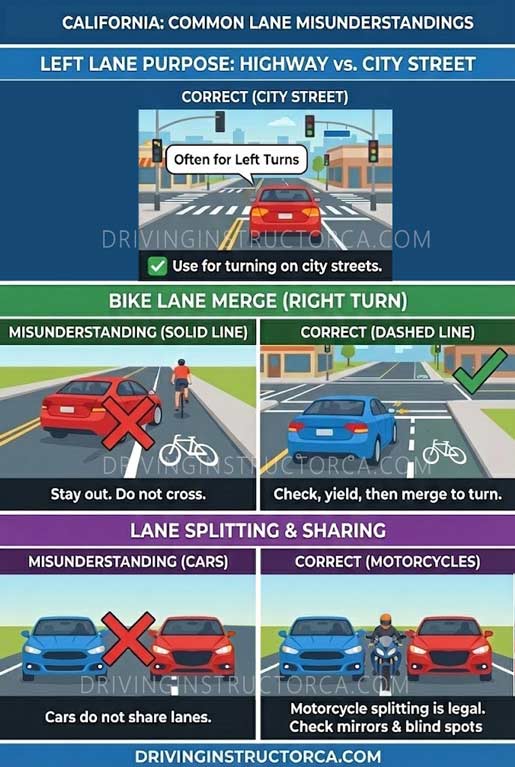
This section is exam-heavy because intersections force you to commit to a lane.
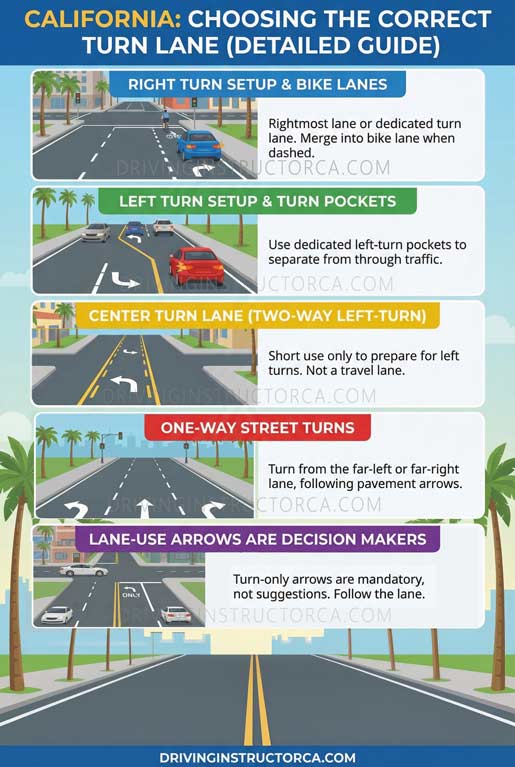
Right turns: set up from the rightmost lane for your direction of travel.
Most of the time, you turn right from the right lane (or from the right side of a single lane). What changes the answer is the road design: a dedicated right-turn lane, arrows, or a bike lane next to the curb.
Left turns: set up from the leftmost lane for your direction of travel.
If there’s a dedicated left-turn pocket, use it when it’s available and safe. Turn pockets exist to separate turning cars from straight-through traffic so everyone can move more smoothly.
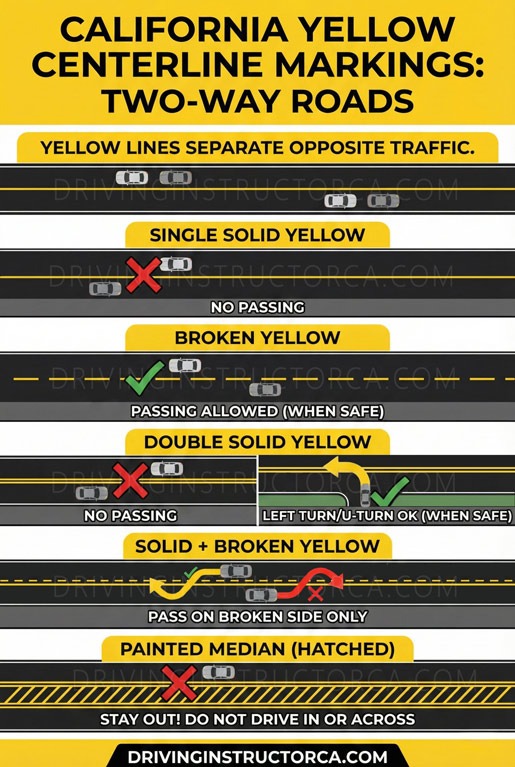
Center turn lanes (two-way left-turn lanes): short use only.
A shared center turn lane is not a travel lane. You enter it to prepare for a left turn into a driveway or side street, then complete the turn. DMV lane questions often test whether you use it for its intended purpose rather than “driving in it.”
One-way streets change the setup.
On a one-way street, you may turn left from the far-left lane and right from the far-right lane. Still, arrows and signs can assign special turn lanes, so read the pavement first.
Lane-use arrows and pavement words are decision makers.
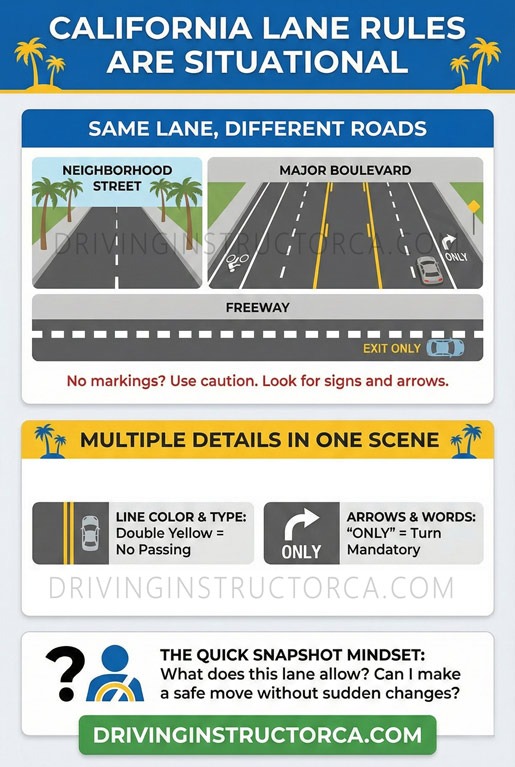
If your lane shows a turn-only arrow, it’s not a suggestion. If you realize late, the safest option is usually to follow your lane and adjust your route later, not cut across near the intersection.
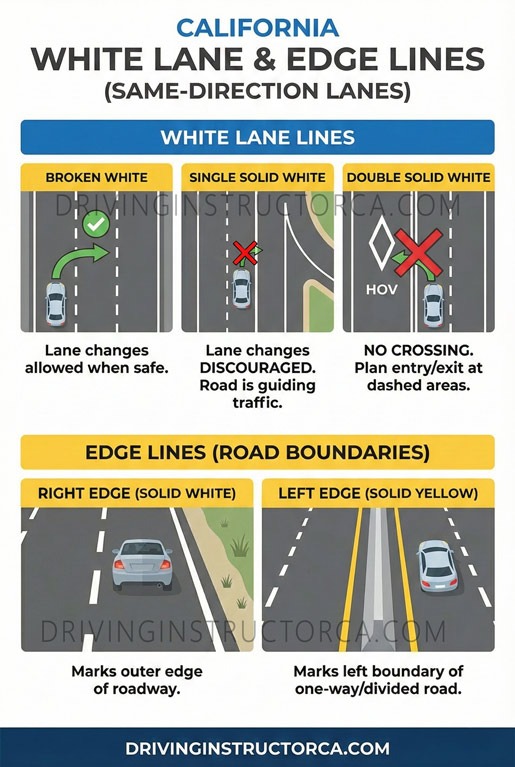
One more practical rule: even when something isn’t described as “illegal” in a question, changing lanes inside an intersection is a poor plan because space is tight and drivers around you are focused on their own turns and signals. Set up before you enter.